Manufacturing
Made in Qingdao, by factories that specialise
We work with three partner factories in Pingdu, Qingdao, the heart of China’s plush industry. Each is built for a different kind of product, so your program goes to the one that suits it best.
Partner factories are named and introduced under NDA once a program is live.
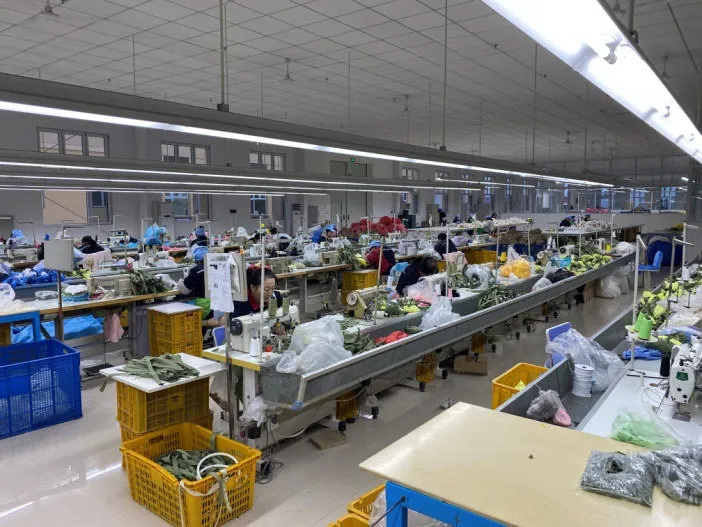
Volume & Infant
Retail-scale character plush, plus a dedicated infant line.
Best for: Large retail programs, mass-market character plush, and baby products such as rattles, teethers, loveys and cloth books.
Highlights
- Full in-house flow: cutting, embroidery, sewing, stuffing, finishing, inspection, needle detection and packing
- Founded in 1999 as a Japanese-owned operation, with production staff trained by Korean technicians to Japanese quality requirements
- Separate infant product line
- building area
- 20,000 m²
- staff
- 120+
- units a year
- 7M+
- sets of production equipment
- 130
Typical products
- Character & licensed-program plush
- Infant: rattles, teethers, loveys, cloth books
- Keychains & mini plush
- Plush headbands, bags & accessories
- Pet toys
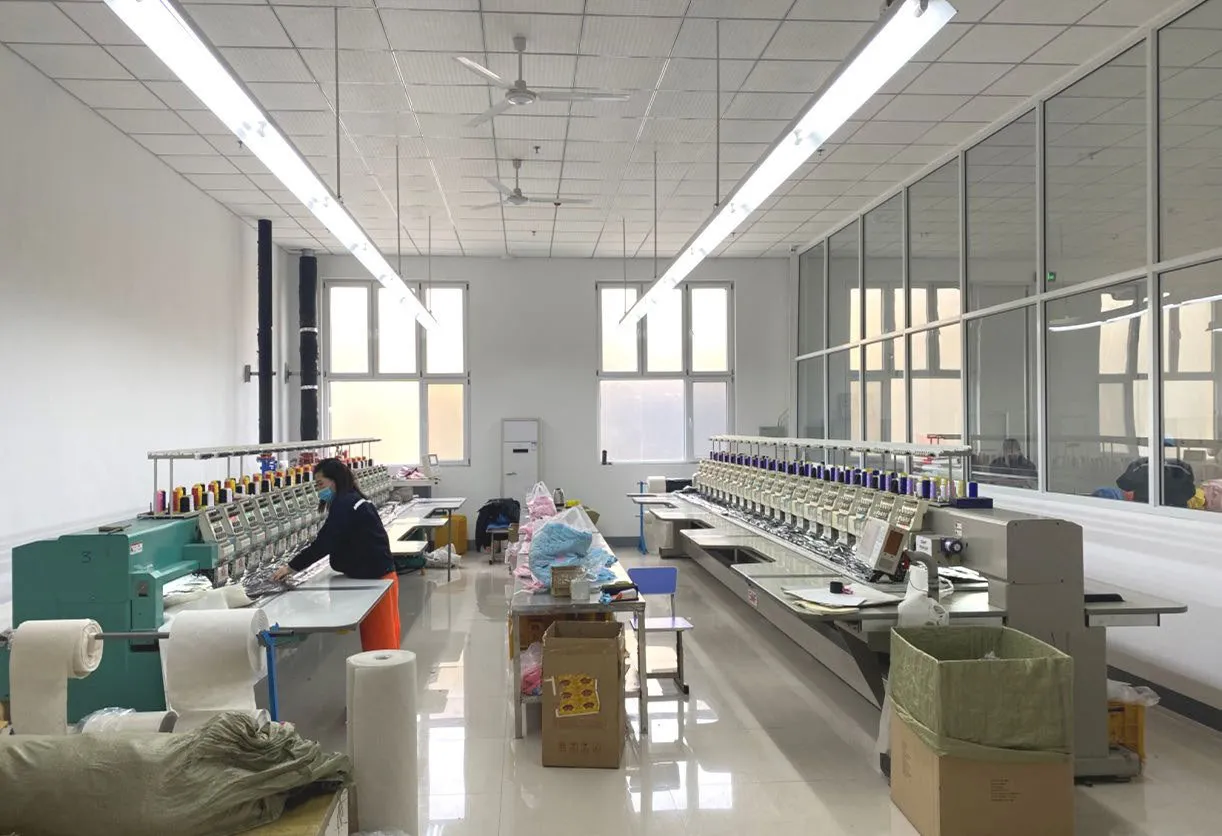
Embroidery workshop 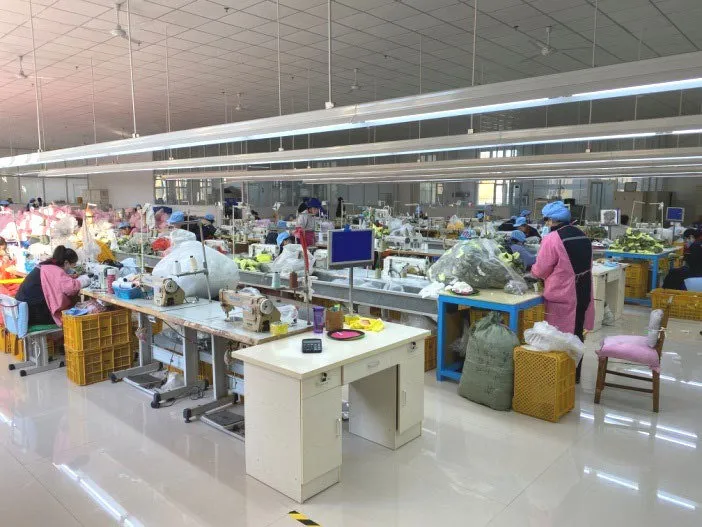
Sewing lines 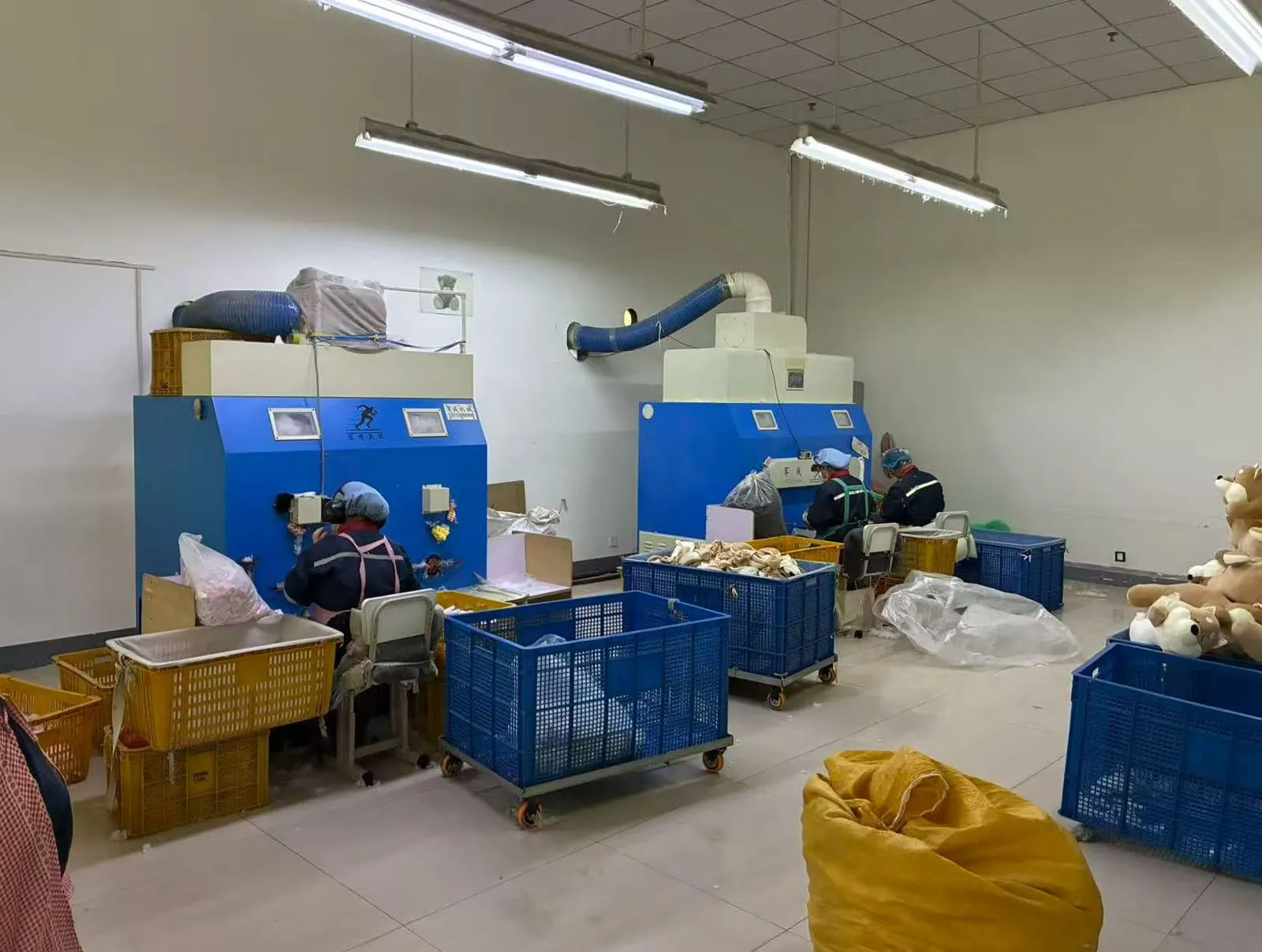
Stuffing 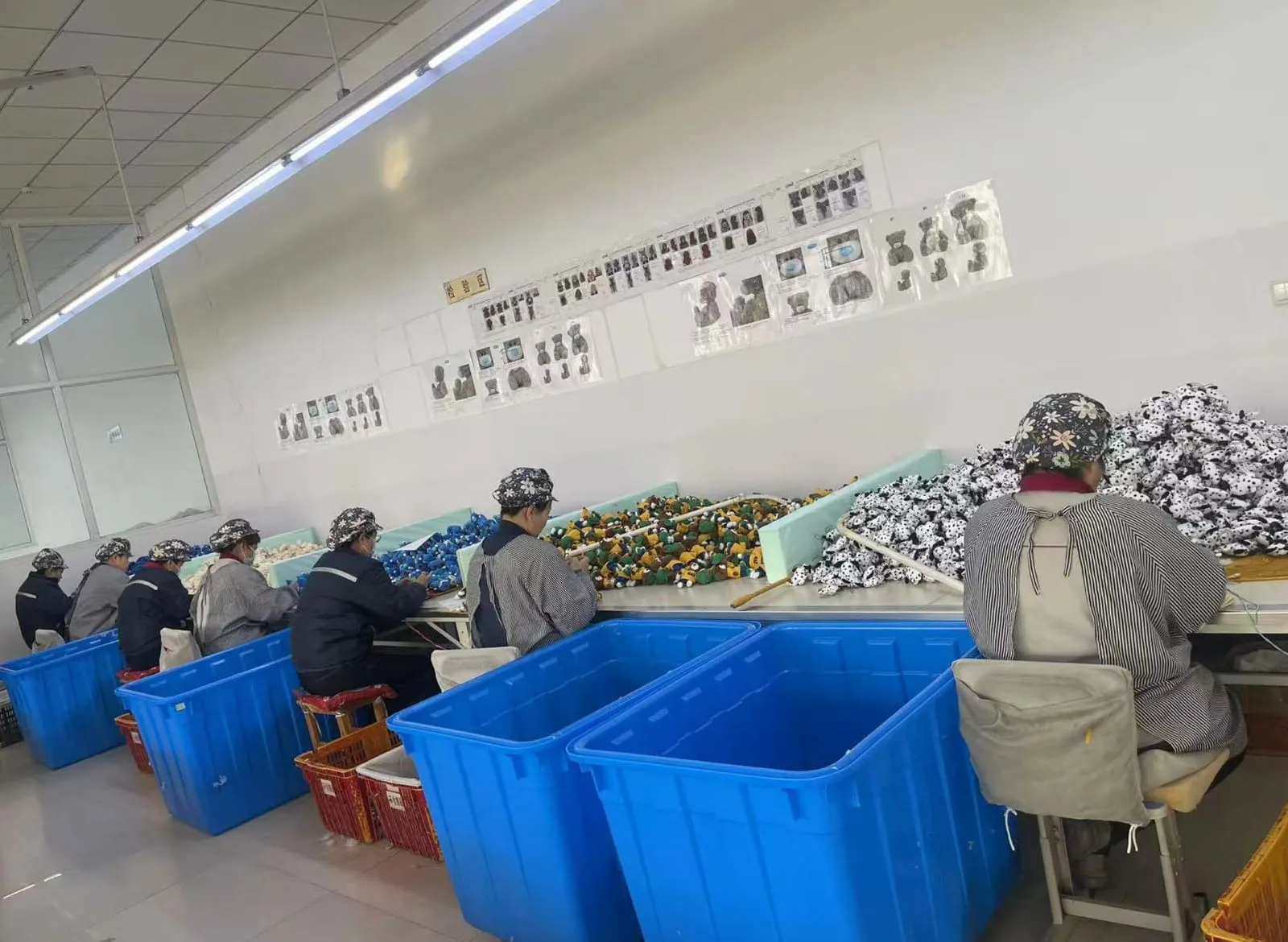
Final inspection against reference sheets 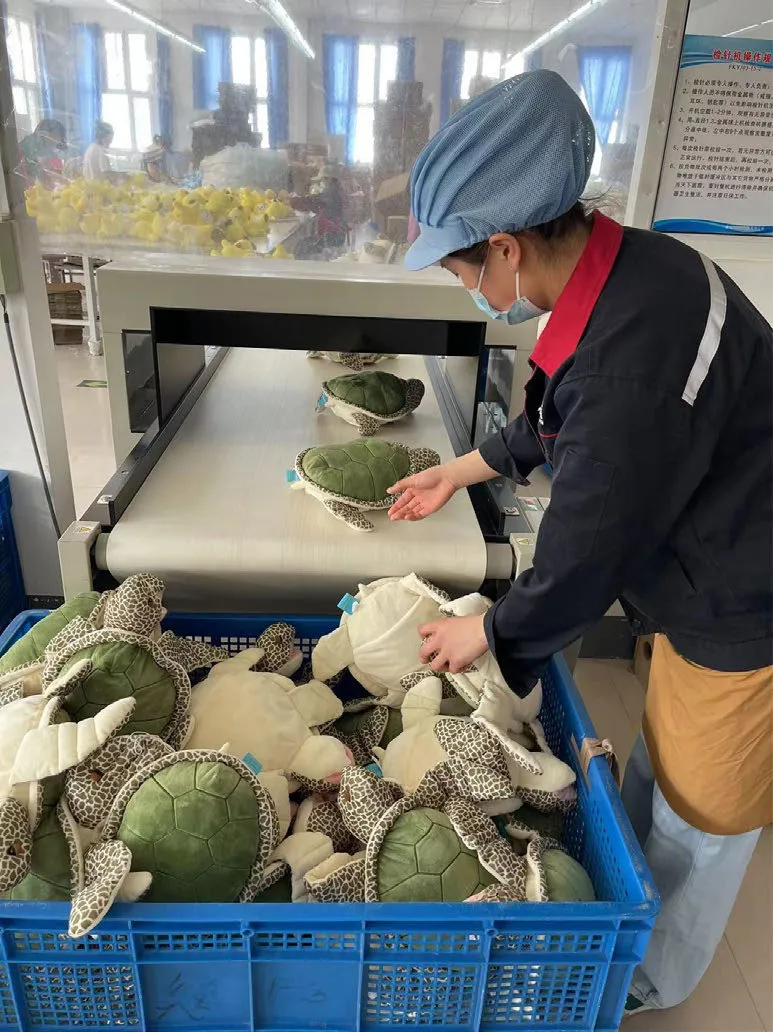
Needle detection
Character Fidelity
Collector-grade detail, matched to a character bible.
Best for: Character and licensed-program plush where the face, hair, costume and proportions have to match an approved reference exactly.
Highlights
- Design, production and inspection handled in one facility, so the people who build the sample also run the order
- Dedicated embroidery department for faces and fine detail
- Separate needle-inspection and final-inspection areas
- New plush designs developed every season
- pattern-making & sampling
- In-house
- embroidery department
- In-house
- needle & final inspection
- In-house
- new design development
- Seasonal
Typical products
- Character & collectible plush
- Plush dolls with costumes and accessories
- Plush bags and bag charms
- Hairbands & accessories
- Plush pillows
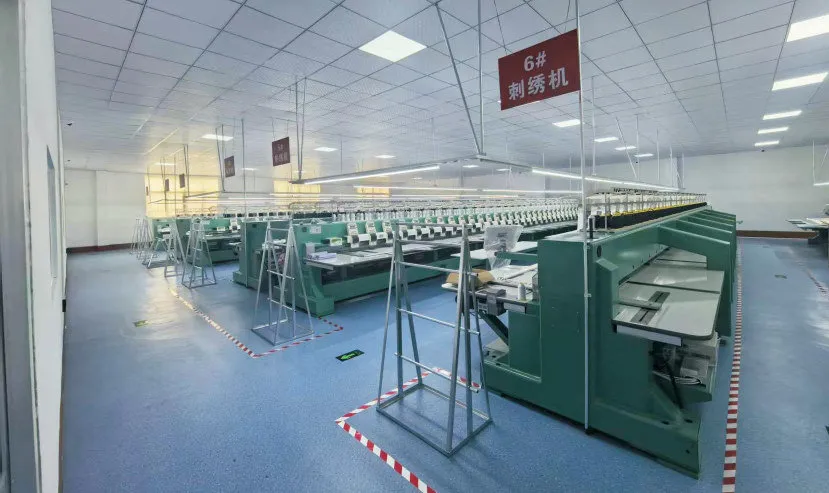
Embroidery department 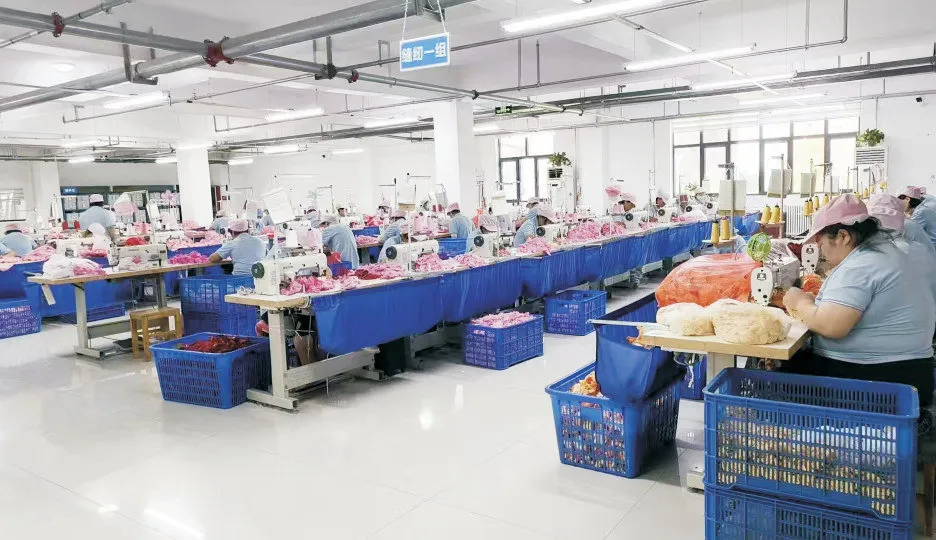
Stitching department 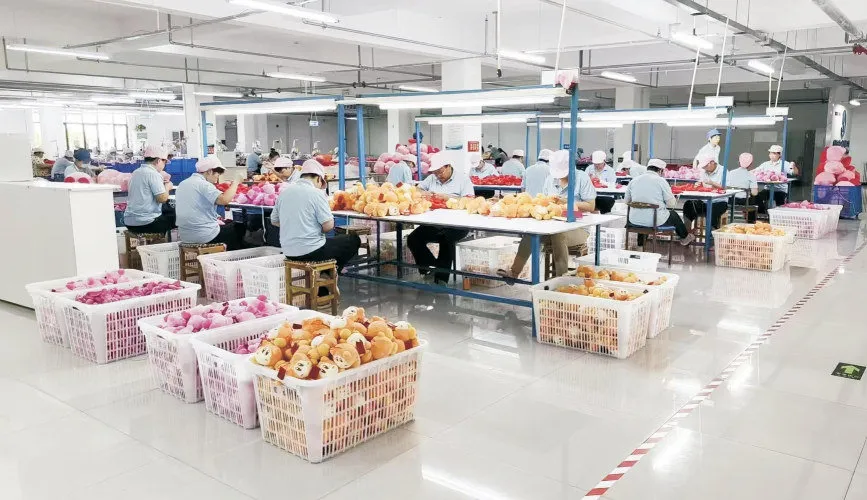
Final finishing 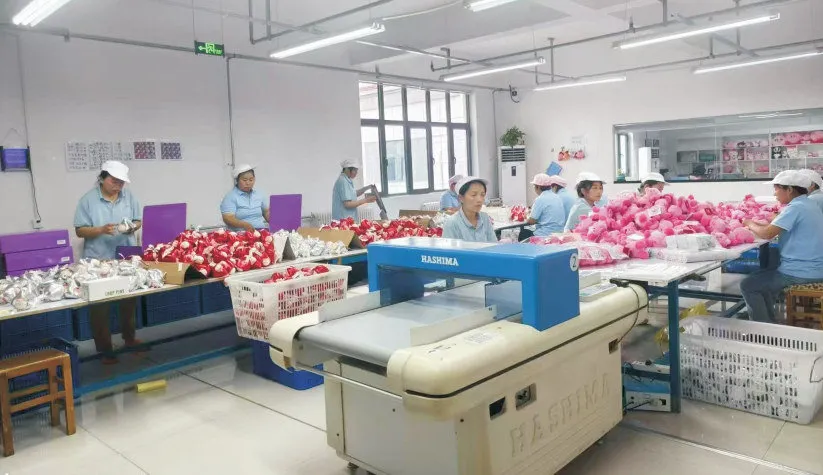
Needle inspection 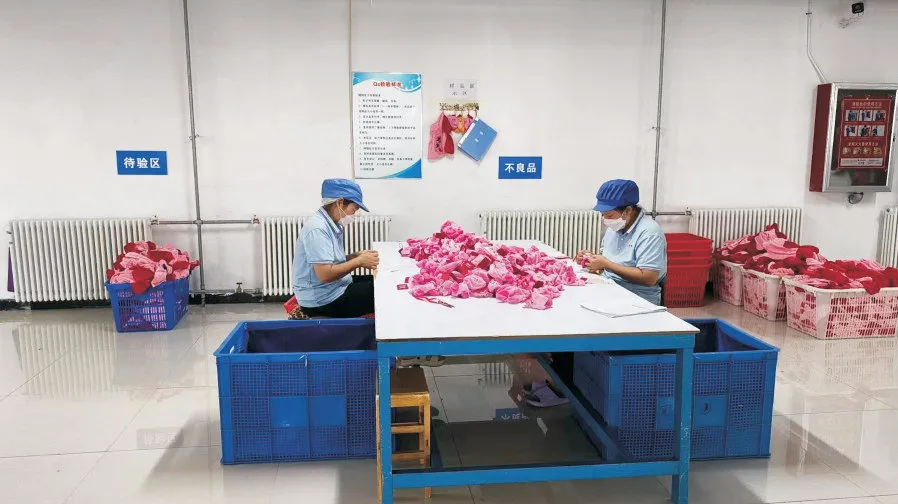
Final inspection
Large Format
Cushions, pillows, home textiles and pet beds at scale.
Best for: Oversized plush, cushions and pillows, home textiles and pet beds, and high-volume plush runs.
Highlights
- Designated supplier to a major Japanese home-furnishings retailer, run to its factory audit requirements
- Laser and computerised cutting; imported Japanese needle-detection equipment
- Two-stage in-line inspection, plus an affiliated inspection company for needle checks, finishing and storage
- Insect-control lamps at every workshop entrance, with needle-control and detector-sensitivity logs kept daily
- Experienced workforce: average tenure of more than eight years
- About an hour from Qingdao’s main fabric and trims market, which keeps sampling fast
- factory area
- 12,000 m²
- staff
- 300
- plush units a day
- 11,000
- 90 cm cushions a day
- 4,600
Typical products
- Cushions & throw pillows
- Large and jumbo plush
- Home textiles
- Pet beds
- Retail plush programs
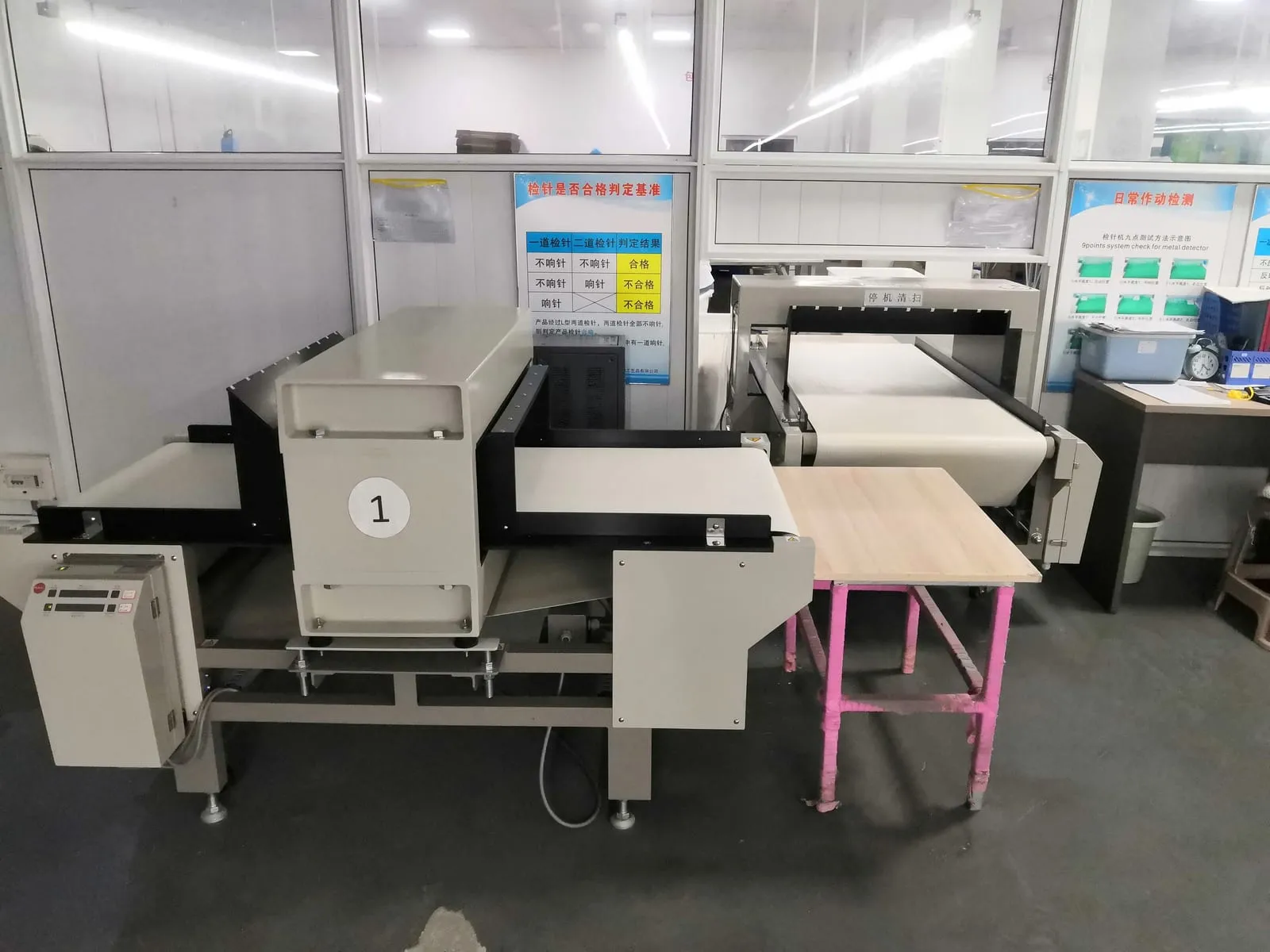
Conveyor needle detectors 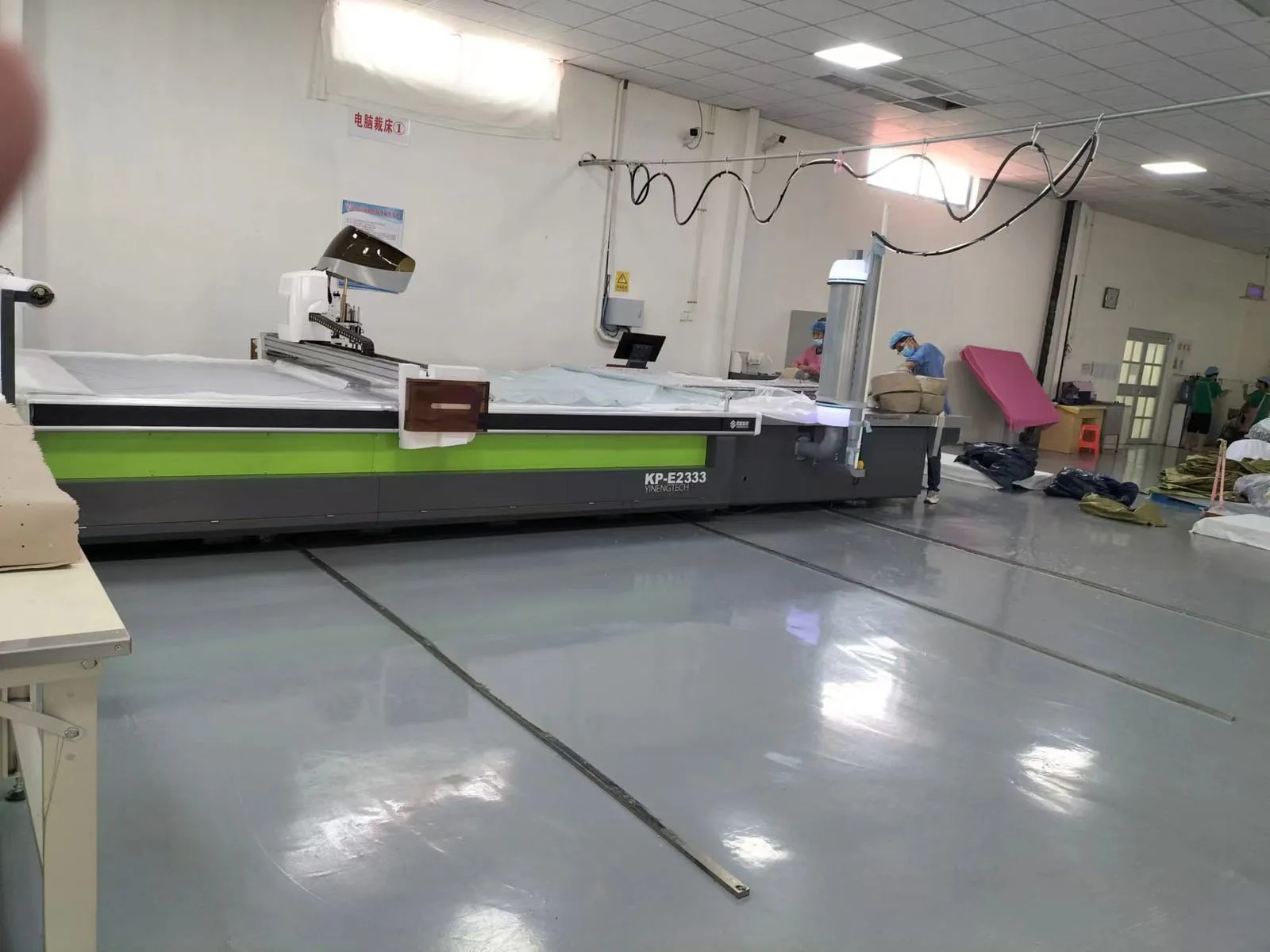
Computerised cutting 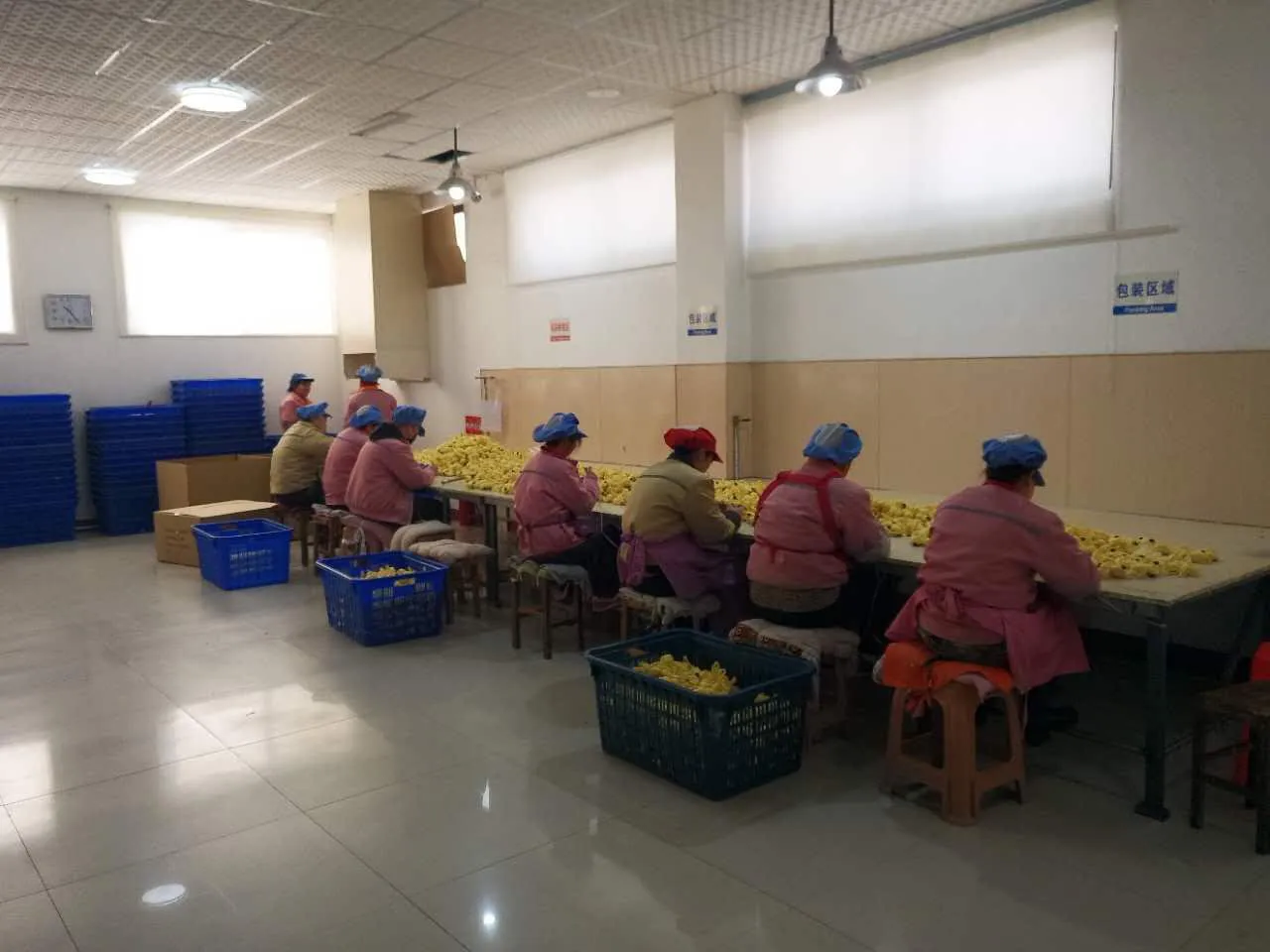
Hand finishing 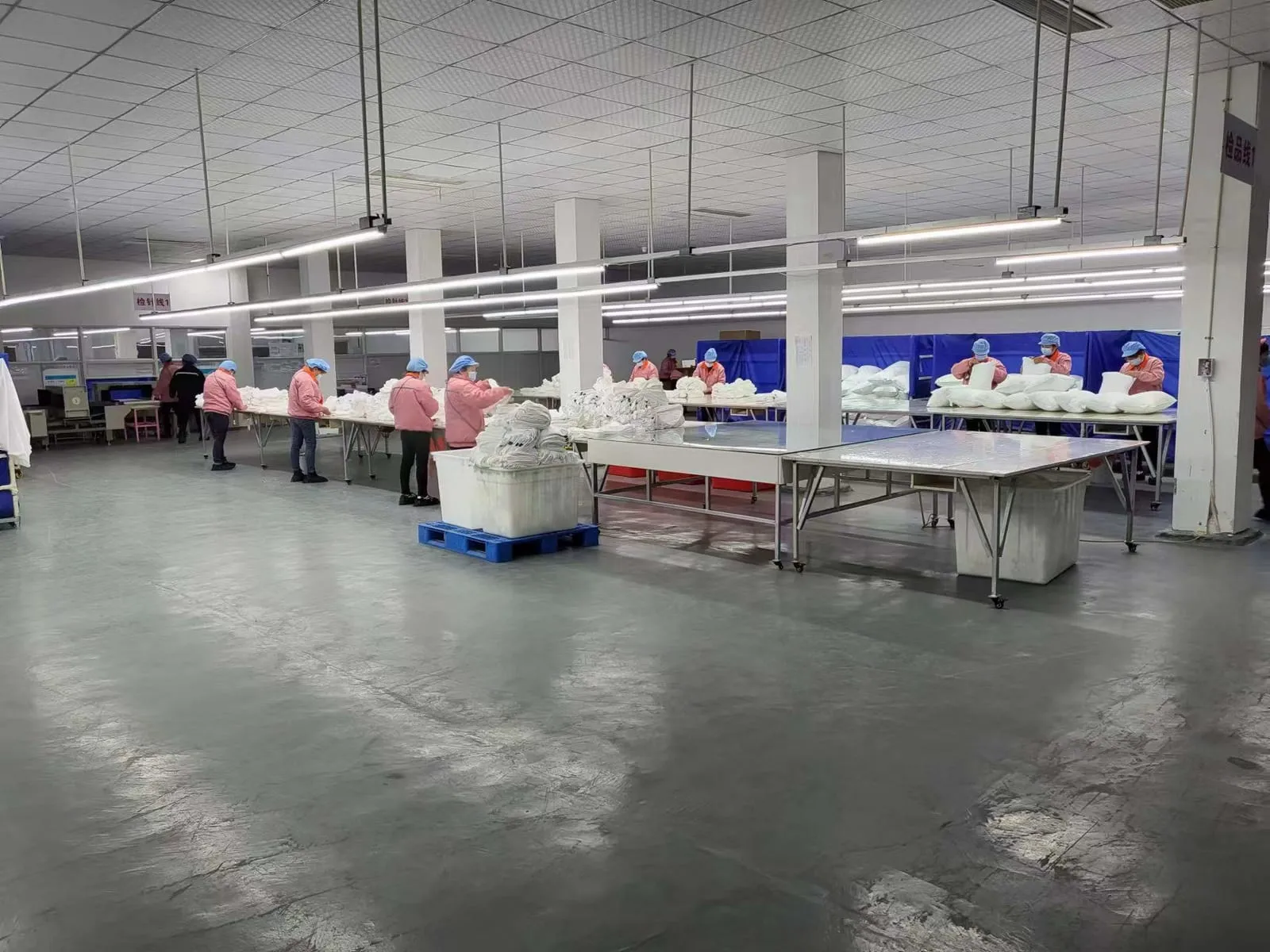
Production hall 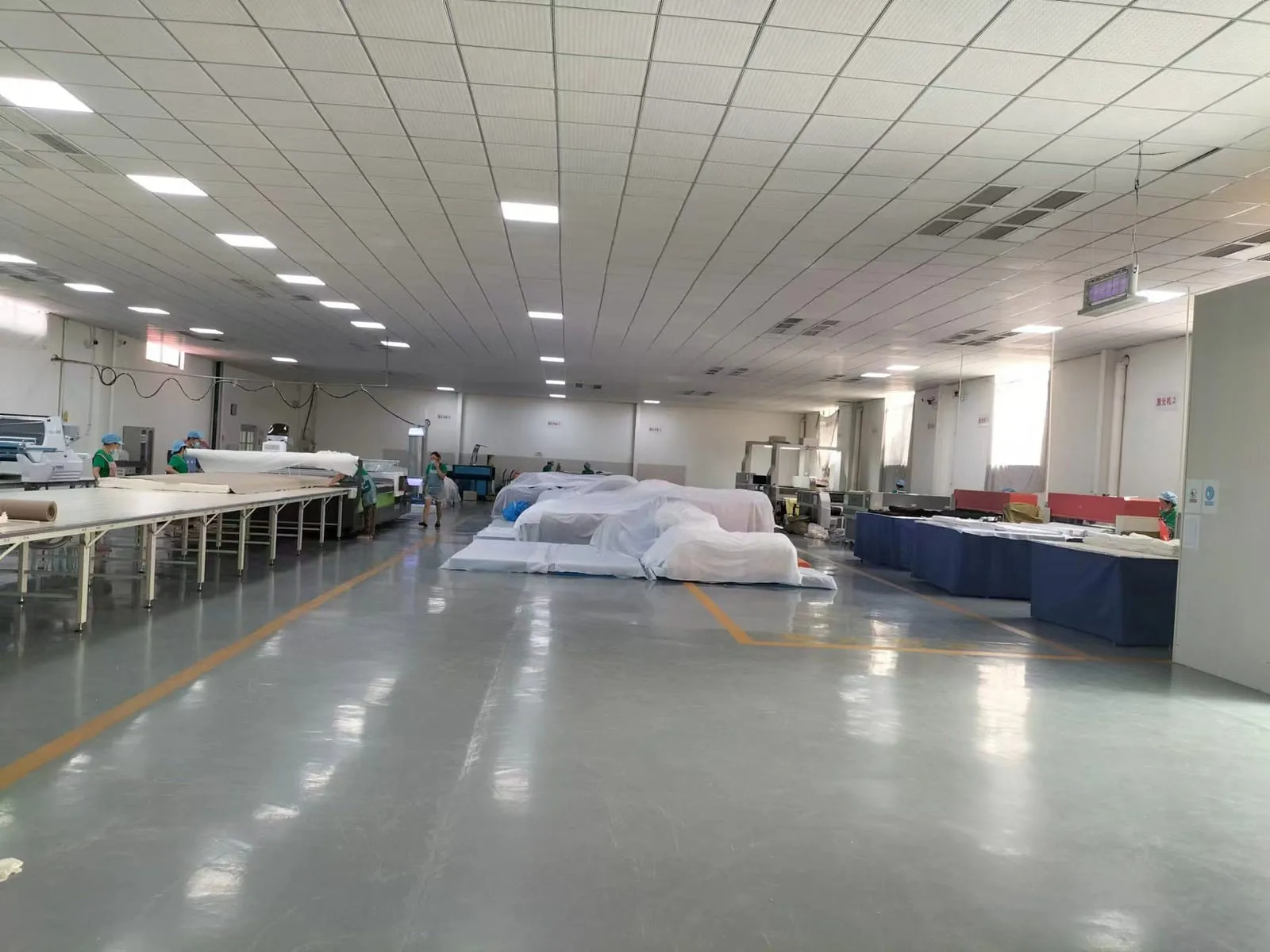
Cutting room
Standards
What all three have in common
Our partner factories were set up to supply Japanese and Korean retailers, and their floors run to those standards: tighter than most US programs ask for.
Built to Japanese & Korean retail standards
All three partners were set up to supply Japanese and Korean retailers, whose factory requirements are stricter than most US programs ask for.
Needle control
Every needle issued and returned is logged, broken needles are accounted for, and every finished piece passes through a needle detector.
Foreign-object & insect protocols
Strict rules on what can be brought onto the floor, insect control at entrances, and checks for stray material in fill and seams.
Independent third-party audits
Our partner factories hold current social-compliance and quality-management audits, and reports are shared with customers who need them for retailer or licensor approval.
On the floor
How a plush moves through the factory
First samples take 5–10 days. Bulk production is typically about 50 days after sample approval.
- 1Fabric inspection
- 2Cutting
- 3Embroidery
- 4Sewing
- 5Stuffing
- 6Finishing
- 7In-line QC
- 8Needle detection
- 9Final inspection
- 10Packing
Which factory is right for your product?
Send us a sketch or a description and we’ll tell you which partner factory we’d use, and why.